One of the most useful things to understand about Amboseli before you go is that the park functions as two very different environments sitting side by side. The swamps and the open plains both deserve your time, but they do not show you the same animals in the same way. Knowing which to prioritise, and when, changes how much you get from every game drive.
The swamps are ecological anchors. They hold permanent water fed by underground snowmelt from Kilimanjaro, which means they remain productive even when the wider plains are dry and quiet. The three main wetland systems, Longinye, Ol Tukai, and Enkongo Narok, are where elephant families concentrate, where buffalo wade in the morning, where birds crowd the water’s edge, and where the scene can feel almost impossibly alive.
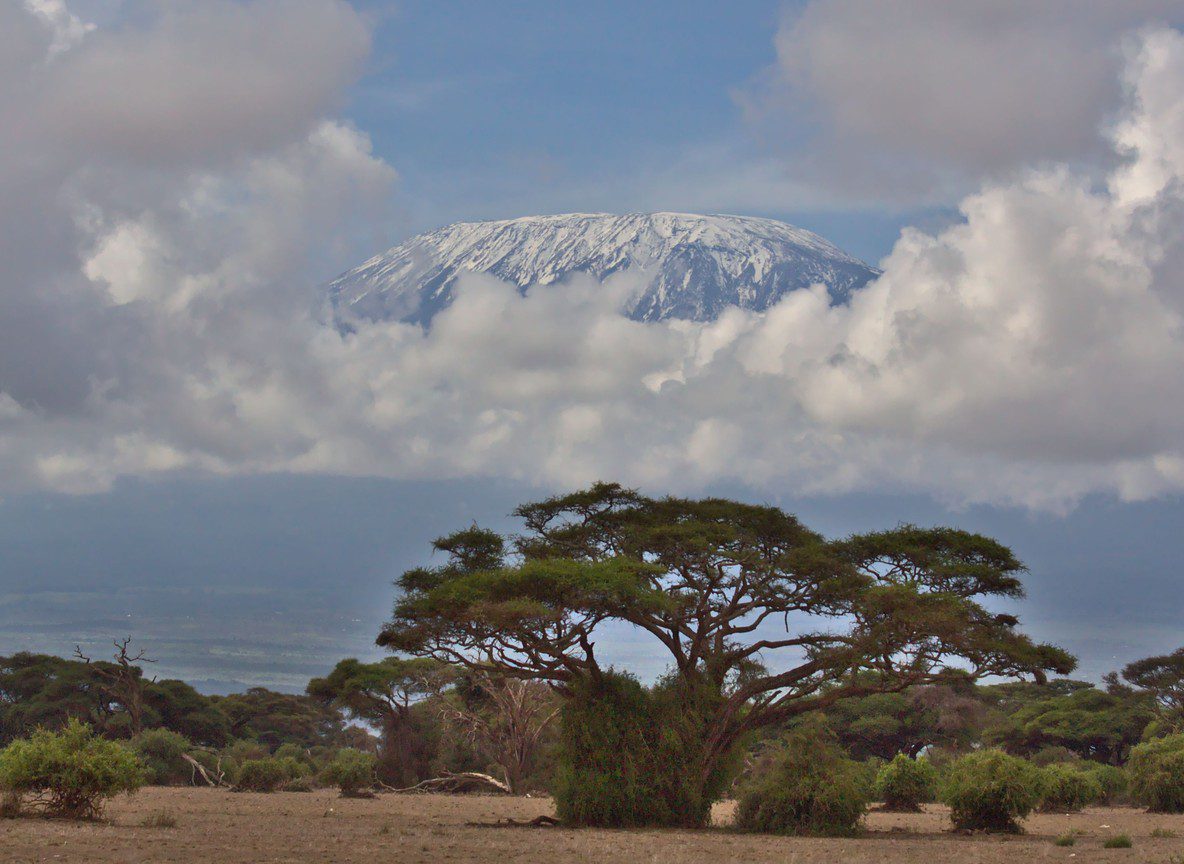
The open plains are where the park reveals its scale. Animals spread across wide grassland, elephant movement becomes readable across long distances, predators show themselves in open country, and the visual language of Amboseli, that iconic blend of flat earth, big sky, and the white mass of Kilimanjaro on the southern horizon, comes into full focus.
The best safari in Amboseli does not choose between them. But understanding each one helps you plan your drives more deliberately.
What the Swamps Offer
Swamp zones are where you go when you want density, intimacy, and wetland life.
The permanent water draws elephant herds consistently throughout the year. In the dry season especially, when water disappears from the outer areas of the ecosystem, families converge on the swamp edges in large numbers. On a good morning at Enkongo Narok, you can watch several family groups interacting simultaneously, calves bathing, older matriarchs steering their herds, bulls moving at the margins.
Buffalo are a daily presence at the water. Hippos live in the deeper sections of the main swamps. The birdlife around wetland margins is outstanding: African fish eagles, saddle-billed storks, pelicans, herons in multiple species, and thousands of smaller waterbirds crowd the vegetation edges. During and after the rains, migratory species arrive in numbers that make the swamp areas genuinely special for birders.
The visual quality of swamp-edge photography is also distinct. Green vegetation against open water, reflected light, layered compositions with large mammals and birds sharing the same frame. It is a different kind of image from what the plains offer, but often more complex and more surprising.
What the Open Plains Offer
The open plains are where the park becomes cinematic.
Animals that would be partially hidden by swamp vegetation are fully visible in open grassland. Elephant herds moving across the plains have a different quality from elephant families feeding at a water source. You can see the architecture of the herd, the way the matriarch leads, the calves staying close, the bulls trailing at distance. That kind of reading is harder in the denser swamp environment.
Zebra, wildebeest, and Thomson’s gazelles use the open grasslands as their primary habitat. Giraffe browse along the woodland fringe where plains meet scattered acacia. When predators are active, the open plains make them trackable in ways the swamps do not allow. Lions seen in swamp margins are often obscured by reeds or vegetation; lions seen on open grassland are readable at distance.
The plains are also where the classic Amboseli photograph happens. Elephants crossing open ground with Kilimanjaro filling the southern horizon is a composition that requires space, distance, and clear sightlines. That image cannot be made from the swamp edge.
Elephants: Swamps vs Plains
Elephants use both habitats, but for different purposes and with different visual results.
At the swamps, elephants feed, drink, cool themselves, and socialise. The pace is slower and closer. Family bonds are visible. Calves play in shallow water. You can watch a single group for thirty minutes and observe behaviour that says something specific about how these animals live.
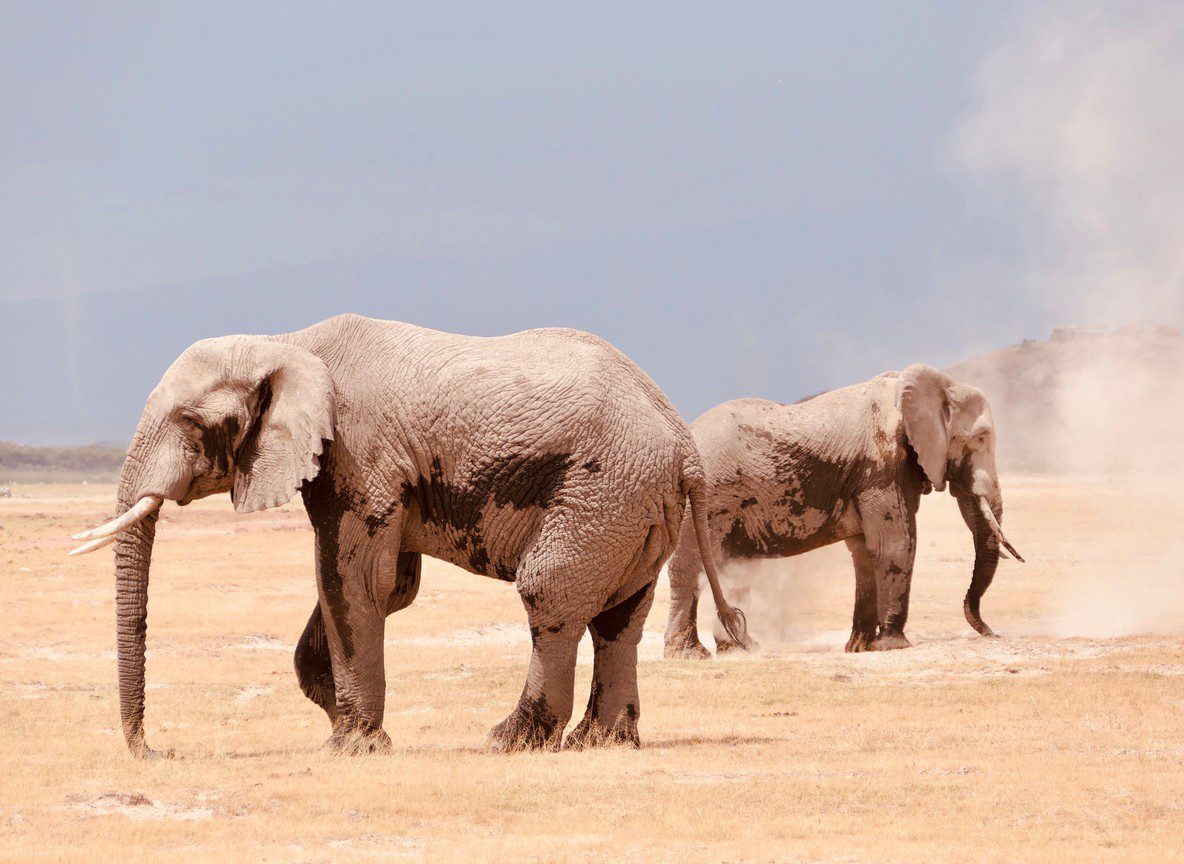
On the plains, elephants move. The long processions of family groups crossing open grassland, kicking up dust in the dry season, or moving in silence across green ground after rain, are a different spectacle. Scale becomes the story rather than behaviour.
For photography, the swamp offers portraits and social scenes. The plains offer movement, landscape, and the iconic mountain-and-elephant composition. A serious elephant photography safari needs both.
Birds: Swamps vs Plains
The swamps win clearly on bird density and variety. Wetland concentration brings a level of bird activity that the plains simply cannot match. The water attracts species that would not otherwise appear in Amboseli’s drier zones.
The plains contribute their own bird life, raptors, secretary birds, ostriches, ground hornbills, and various starlings and larks, but the concentration is lower and the encounters are more scattered. If birding is your primary focus, the swamp circuits should form the backbone of your game drives with the plains as secondary territory.
Predators: More Balanced Than Expected
Both habitats contribute to predator sightings, though in different ways.
The swamp edges bring prey concentrations, and lions know it. Watching the grass margins of a swamp for lion movement is productive in the early morning and late afternoon. Cheetahs, though less common in Amboseli than in the Masai Mara, are more often encountered on open ground where their hunting behaviour is fully visible.
Guides who know Amboseli tend to think in terms of the transition zone, the area where swamp margin meets open grassland. That edge is often the most productive territory for predator sightings, combining the prey density of the wetland with the visibility of the plains.
Photography: Two Different Portfolios
Swamp photography produces layered, complex images. The interplay of water, vegetation, large mammals, and birds creates compositions with depth and ecological richness. Reflections when the water is calm. The textural contrast between green swamp and dry surrounding land. These are distinctive images.
Plains photography produces clean, spacious images. Wide frames, silhouettes at dawn and dusk, the compression effect of a long telephoto pulling Kilimanjaro into the frame behind a herd. These are the images most people associate with Amboseli.
A well-structured safari produces both. A single habitat focused approach leaves gaps in the portfolio and misses what makes Amboseli distinctive as a photographic destination.
Season Shifts the Balance
The relationship between swamps and plains is not static through the year.
In the dry season (June to October and January to February), the swamps become more important because they hold the only reliable water. Wildlife concentration around them intensifies. The plains may look sparse in the middle of the day, but game drives that start at swamps and move to the plains in the cooler morning hours capture both habitat dynamics well.
In the green season (March to May and November), the plains green up and water sources appear more widely across the ecosystem. Animals spread out, which can make sightings less concentrated but more varied in location. The swamps remain productive, but they lose some of their relative advantage.
Practical Planning: How to Use Both Habitats
A well-designed Amboseli game drive typically follows a structure something like this:
Start at the swamp edge in the pre-dawn hours. Elephant families are often present, birds are active, and if Kilimanjaro is going to show, the mountain will be visible during this early window before cloud builds from the east.
Move across the open plains through the mid-morning hours. Track predators if activity has been reported. Watch for large bull elephants moving alone across open ground. Look for the grazer herds.
Return to swamp margins in the late afternoon as the light turns warm. Buffalo come back to water. Elephants return for the evening drink. The swamp scenes in the last hour of light are often the strongest of the day.
That structure gives you both habitats across a single long game drive without treating either as secondary.
Explorer Notes
The biggest mistake first-time Amboseli visitors make is spending all their time at the swamps because the wildlife is obvious and concentrated there. The plains feel emptier by comparison. But the emptiness of the plains is actually openness, and openness is what makes certain images and certain wildlife moments possible.
The second most common mistake is doing the opposite: staying on the main plains circuit and never getting close to the water. The swamps are where Amboseli’s ecological story actually plays out.
The park works because of both. Plan around both.
Quick Reference
| Habitat | Strongest For |
|---|---|
| Swamps | Elephant families, buffalo, hippo, wetland birds, layered photography, dry-season concentration |
| Open plains | Grazer herds, predator visibility, movement photography, wide-frame compositions, Kilimanjaro sightlines |
What to Read Next
- Amboseli wildlife photography guide covers how to structure your game drives and gear choices around both habitats
- Amboseli weather month by month explains how seasonal shifts change swamp levels and wildlife distribution
- Amboseli vs Tsavo if you are deciding between Kenya’s main southern parks
If this guide has you ready to travel, a safari specialist can handle the route, camps, and logistics end to end.
Want to Book a Tour With Us?